polite grooming
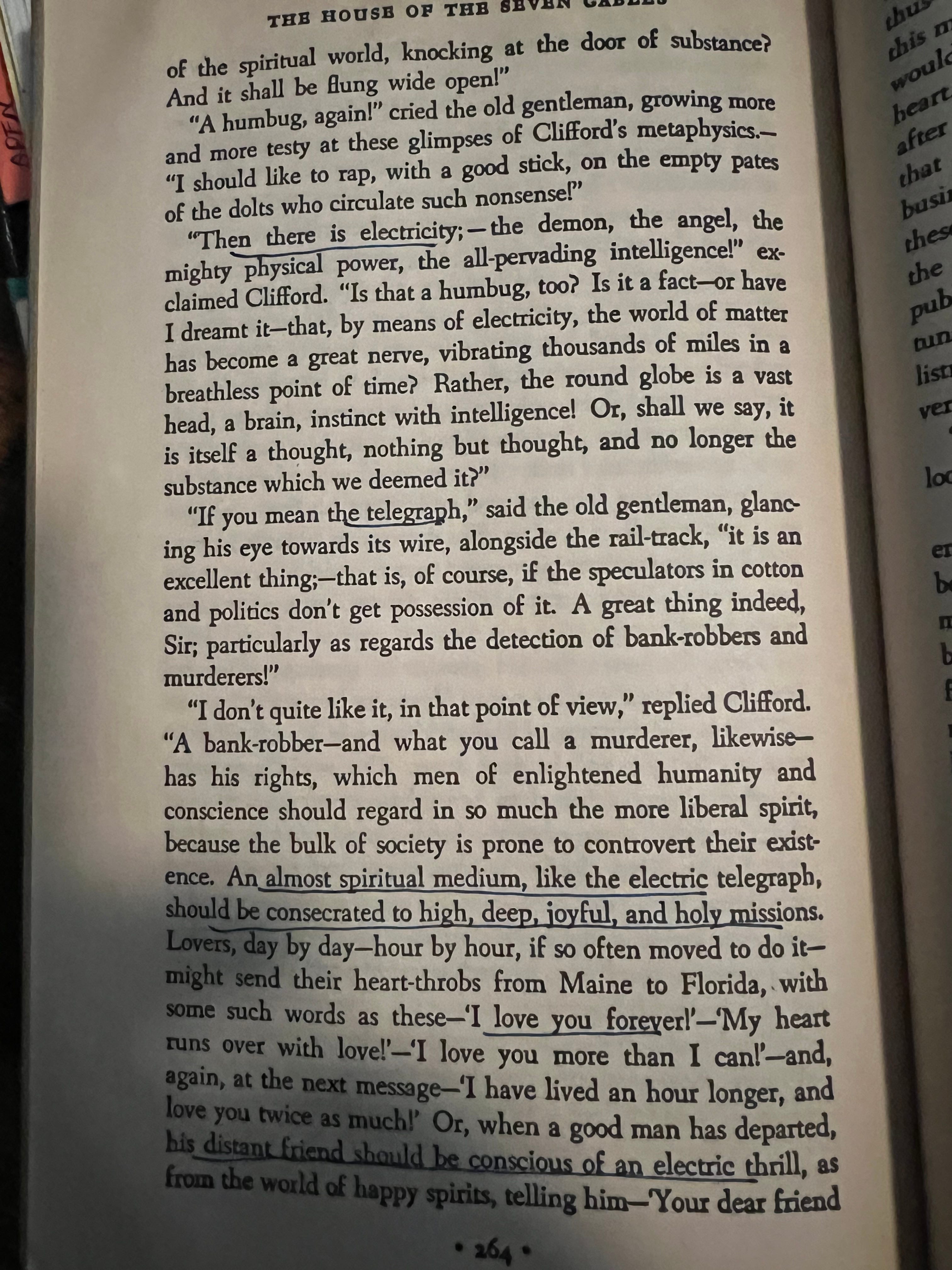
a reminder that "history" been faking reality and counterfeiting authority since at least 1692

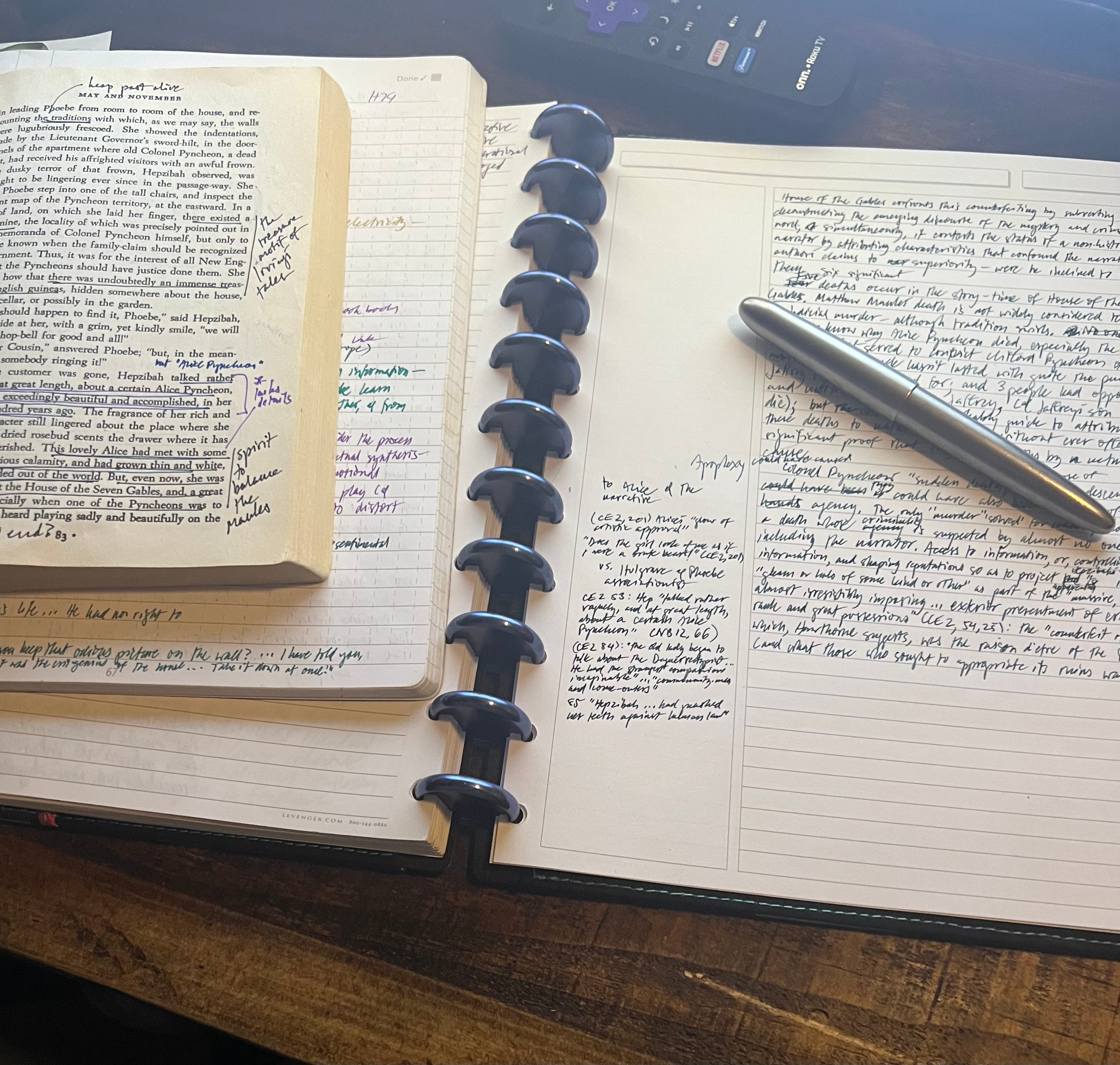
Every chapter of Nathaniel Hawthorne’s House of the Seven Gables links political success, commercial profit, and ‘moral’ reputation to men who exploit discourse to represent evil as respectability and politeness. The innocent and imaginative suffer shame, guilt, and exclusion from polite history and culture.
The relationship that Holgrave and Phoebe negotiate, however, grows from a recognition of mutual aptitudes rather than reputations; its sequence of consensual negotiations follows Alfred Brisbane’s Associationism rather than any of the codes of gentility and sentiment one would find in comparable stories of the time. (The Tenant of Wildfell Hall comes close). But, as a veteran of the Brook Farm commune, Hawthorne knew that such attempts always have to fend off attacks not merely from those outside, but also from the deeply ingrained habits of politeness that most “courtship” existed to reproduce.
In the novel, these attacks come from [mostly] men who corrupt nature and themselves to “grasp, and arrange, and appropriate to themselves, the big, heavy, solid unrealities, such as gold, landed estates, offices of trust and emolument, and public honors” (CE 2, 214, 224). These intangible forces, especially, “real estate,” which Clifford Pyncheon will target as “the broad foundation on which nearly all the guilt of this world rests” (CE 2, 263), induce the corruption of discourse and imagination to produce “the counterfeit of right” (CE 2, 25):
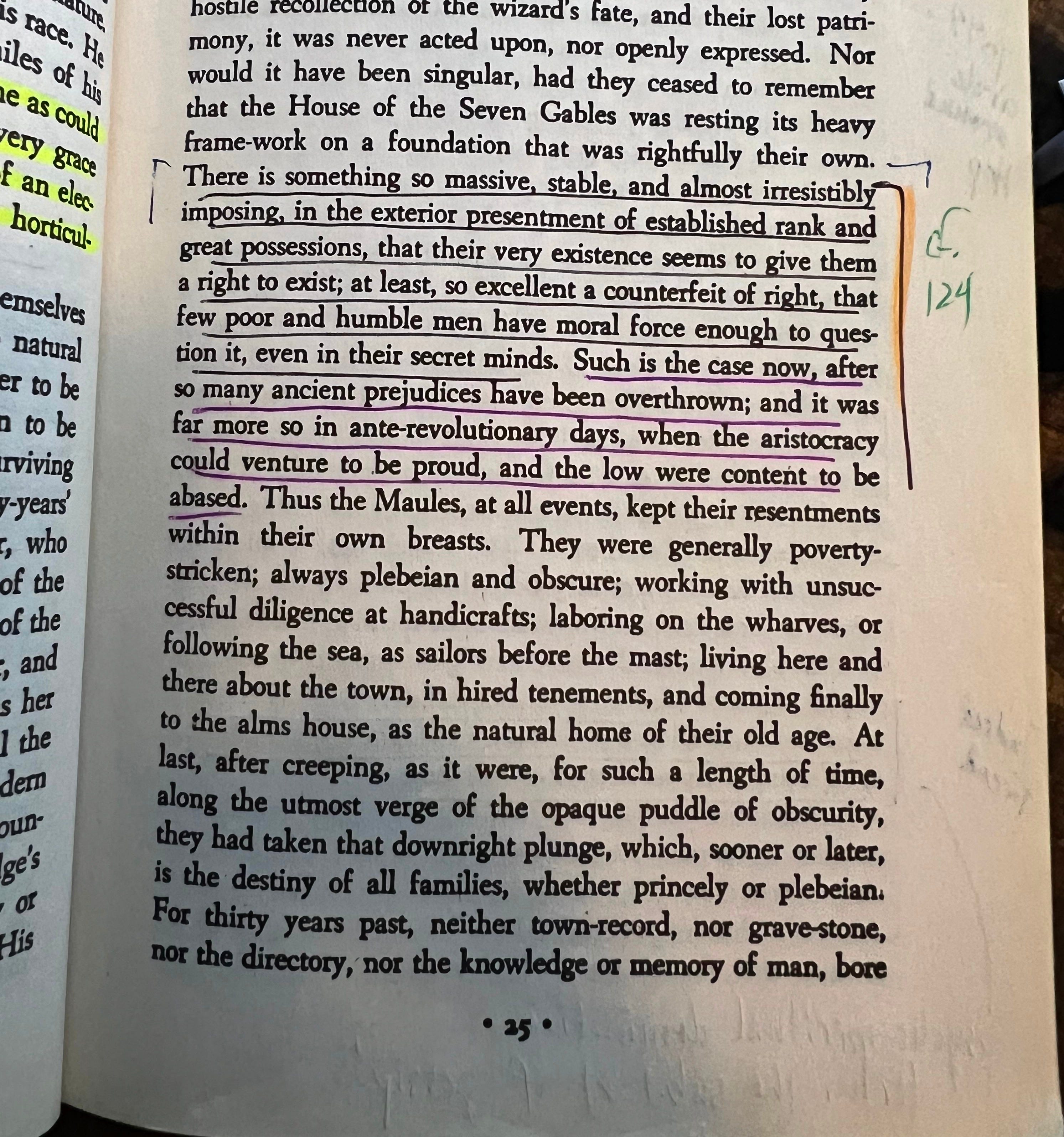
If there is an original sin in House of the Seven Gables, this process founds it. If one were to align this critique with the Lockean defense of property as the ground of civil society . . . well, one would find a sneaky demolition. And, Hawthorne’s narrative asides throughout the story—especially in “The Arched Window,” which looks like a 19th century “what would happen if someone watched Fox News” assignment—show that Hawthorne consistently exposed how those in authority—the Standing Order—used these socially-constructed emotions to produce the “counterfeit of right” that vitiated and perverted individual “moral force” (CE 2, 25). Indeed, the facts of the narrative frequently repudiate the narrator’s claims—as in the one here that “the low were content to be abased”—which, oddly enough, is a claim that one sees repeated today in assertions about acquiescence to the culture of deference . . .
Neither Phoebe nor Holgrave come from the ranks of the gentility. This shows Hawthorne critiquing rather than emulating the Sentimental fiction he modeled House of The Seven Gables upon. Character growth occurs in H7G as they learn to abandon the shame-guilt responses inculcated in religious and gentile discourse and begin to trust other ways of building relationships. This is particularly true of its heroine, Hepzibah, and its discerner, Phoebe.
Hawthorne scholarship has not acknowledged this fundamental rejection of ‘polite’ culture. Many scholars, including my erstwhile mentors, John Gatta and Milton Stern, seemed embarrassed that H7G showed any proximity to sentimental fiction. (They could pretend that The Scarlet Letter was some grand tragedy if they made Arthur the central character). This ignorance stems, first, from the inability to recognize that Hawthorne did not share the Standing Order upbringing that so many other American writers did. Even if they claimed to reject it, they still wrote from an internalization of its dicta that Hawthorne did not. Similarly, he also rejected the courtship and matrimonial practices, in particular profiting from marriage, that people like Emerson and Bancroft used. And, as I show in The Mysterious Package, he could not work within the confines of its political discourse. T. Walter Herbert, in Dearest Beloved, studied how the Hawthorne marriage tried, and failed to establish the new model of partnership proposed in H7G. Herbert, if I remember correctly, doesn’t acknowledge how outside pressures deformed the relationship. Notably, Phoebe and Holgrave’s assumption of Pynchon wealth will insulate them from that.
H7G synthesizes gothic, comedic, and sentimental tropes; it resembles a work like The Tenant of Wildfell Hall (which is more like The Scarlet Letter, actually), by featuring a central couple who exist tangentially to the dominant culture. It differs from Tenant, and many other stories, by featuring a 60 year-old woman as its heroic figure, and by having her struggle revolve around how she has been trapped within her family’s history of institutionally-sanctioned theft, murder, and duplicity.
Hawthorne attacks Standing Order appropriations of storytelling and social norms through all of House of the Seven Gables’s narrative features. Characters who produce their own “natural magic” struggle to protect (or rescue) it from the grasping sycophancy of the Standing Order discourses of “clergyman,” “legal critic,” “inscriber of tombstones, nor general or local politics” (CE 2, 122). These content creators manufacture—at some remove from the reality of lived experience—an “eminent person’s sincerity as a christian, or respectability as a man, or integrity as a judge, or courage and faithfulness as the often-tried representative of his political party” (CE 2, 122). One consequence of the refusal of American literary historians to deal with the importance of the Standing Order is that Hawthorne scholars have never recognized that the five generations of legal, religious, and political discourse which comprised it become the gothic force of corruption in House of the Seven Gables. Among other perversions, this discourse maintains “Pyncheon pride.”
Hawthorne wanted to use the “Romantic tradition . . . to connect a by-gone time with the very Present that is flitting away from us” (CE 2, 2). Scholars have overemphasized the “Romantic” adjective and undervalued Hawthorne’s wide readings in the late medievel to Elizabethan romances that were some of his favorite childhood texts. He knew, in short, the anti-imperial Romantic tradition in western literature that David Quint surveys in Epic and Empire (Princeton, 1993). For Quint, the Romantic tradition “traces a continuous topos, repeated from poem to poem: the prophetic curse launched by the losers that constitutes a rival narrative of resistance coexisting alongside the triumphalist history that the epic proclaims for the winners” (11). H7G features a prophetic curse uttered by a usurped loser; it constitutes a rival narrative by giving narrative control to a rival narrator for a key portion of the story. Within “the writer’s” portion of the story, when the narrator isn’t concealing information from the reader, he seems no more than a reporter and commenter on events about which some of the characters know more about than he does. Yet, he also pronounces acerbic critiques of the sources upon which he pretends to believe: this is where the “counterfeit of right” insight appears.
House of the Seven Gables struggles to imagine beyond what David Quint calls “the political and poetic compexity of both traditions: the winners’ epic that projects the losers resistant narratives, the losers’ epic that is still deeply committed to the motives of the winners it opposes” (Epic & Empire 16). This resistance appears at every level of the story, but it is not a resistance to some abstracted literary or cultural tradition. Hawthorne mocks and repudiates the assumptions, tropes, and plots retailed by the Standing Order—and those who sought to perpetuate its alleged cultural power. This social institution and political structure, which ostensibly failed in 1832, persists in the secret societies at Harvard and Yale etc. and how the norms that people like David Brooks take to be unquestionable axioms of decency were formed and promulgated as the bedrock of a polite society that can somehow include Jeffrey Epstein.
“It was once our good fortune to see this picture,” (CE 2, 31), Hawthorne writes of the quasi-magical portrait of Colonel Pynccheon that terrifies and mystifies generations of Pyncheons and their Salem neighbors. Like his alleged possession of Hester’s embroidered badge, this sentence grants the narrator a right to comment because he has contacted the artifacts. But it puts the narrator on a different plane in the story from Holgrave, whose failed attempts to create a dagerreotyped replacement for Judge Jaffrey Pyncheon insert him into a potential position of cultural myth-maker using new technologies to perpetuate established power. Hawthorne’s narrator seems excluded or alienated from this position. Along with vaguely mentioned tales “from legendary aunts and grandmothers” which sustain Hepzibah (CE 2, 240), the narrator’s contacts allow him access to some but not all of the information necessary to reconstruct a a series of events for which, pointedly, no written records exist.
Readers must recognize, though, that the historical records, like the portrait of Colonel Pyncheon, moreover, were made to deceive—to forge a right to maintain a usurped power. Their rhetoric distracts readers and denies them the ability to engage with a ‘history’ based in crime. Both the ‘official’ records and the somewhat bewildered narrator, who tries to assemble a story of the ‘present’ in which some of the characters know more about the ‘past’ than he does, confound any assertion of the narrative superiority required to claim historical privilege. Indeed, the narrator knowing the agenda and menu at “the most important, in its consequences, of all the dinners you ever ate” in “Governor Pyncheon” (CE 2, 273) indicts narrative omniscience as being too often confined to the ruling class; at the same time it questions who this narrator could be.
H7G could read as an inter-generational murder-mystery: six people, 5 Pyncheons and 1 Maule, die in mysterious circumstances over the course of nearly 150ish years from 1692 to sometime in the 1840s. Matthew Maule’s death becomes known as a judicial murder; no one, especially the Pyncheons, seems to know how or why Alice Pyncheon died; the story that served to convict Clifford Pyncheon of murdering his uncle hasn’t aged as well as cousin Jaffrey would have hoped, and 3 people had opportunity and motive to murder Jaffrey [and both of Jaffrey’s sons die—one of shipwreck, the other from Jaffrey cutting him off for dissolution]. The narrator seems almost as precipitant in assigning most of these deaths to a medical condition as did the examiner who determined Colonel Pyncheon to have succumbed to “Sudden Death” (CE 2, 17).
The only ‘murder’ solved for readers is a death that by the 1840s almost no one in the community, including the narrator, suspects of criminality. Resembling Hester Prynne in her power to sustain folk influence, Alice Pyncheon sustains influence absent any lingering specific knowledge about what happened to her or who she really was. Even as Alice “was supposed to haunt the Seven Gables” by playing beautifully sad melodies on her harpsichord (CE 2, 83, 84), the details of her life are as closed to the Pyncheons as her harpsichord was to Hepzibah when she took music lessons as a child. If Hepzibah could not practice music at home and never developed skill (CE 2, 84), the lack of access to details means that Alice’s legacy also remains inert.
Readers might miss H7G’s first mention of Alice. Hepzibah tells long stories to Phoebe about “a certain Alice Pyncheon, who had been exceedingly beautiful and accomplished, in her lifetime, a hundred years ago” (CE 2, 28, 83). Hepzibah knows an Alice framed by Standing Order characteristics for women. Conversely, Hepzibah knows, or the narrator reports, precisely nothing interesting about her: “This lovely Alice had met with some great and mysterious calamity, and had grown thin and weak, and gradually faded out of the world” (CE 2, 83).
Dutiful skimmers of tables of contents might alert themselves to Alice, though, because chapter 13 is titled “Alice Pyncheon.” It solves the mystery of her evanescence, while challenging fundamental narrative presumptions. “Alice Pyncheon,” is, as Holgrave tells Phoebe as he’s about to read it to her, “an incident of the Pyncheon family-history, with which I happen to be acquainted” (CE 2, 186). He wrote it as “a legend . . . to publish it in a magazine” (CE 2, 186), but this amplification of Hepzibah’s reported tale in Chapter 5, “May and November,” does not merely draw on Pyncheon family history to solve what happened to Alice. His writing reveals Holgrave’s character to readers, much as his careful gardening had revealed him to Phoebe.
“Alice Pyncheon” echoes Hawthorne’s United States and Democratic Review work (in particular, the four Legends of the Province House). Its major characters suffer because their capacities for real love and relationships are perverted by the delusions and frauds that legitimate aristocracy and the Standing Order. Gervayse Pyncheon, still traumatized by discovering his dead grandfather 37 years before at the opening of the house, “had no personal attachment for the house, nor any pleasant associations connected with his childish residence in it” (CE 2, 198). The house, like his daughter Alice, only figures in Gervayse’s “inordinate desire for measuring his land by miles, instead of acres” that drives pursuit of “imaginary magnificence” (CE 2, 208, 204). This pursuit, involving a mysterious land deed to huge tracts of land in Maine which disappeared on the day Colonel Pyncheon died, drives Gervayse to risk allowing the son of the house’s builder to interview Alice. Inexplicably, or perhaps for cruelty, Colonel Pyncheon contracted with the son of the man he had executed for witchcraft to build his house.
Gervayse’s corruption is obvious, especially within the 1840s democratic framing Hawthorne makes for Holgrave. Matthew Maule’s corruption as the grandson driven by resentment and exclusion and injustice is also obvious. But what of Alice? The pivotal section included below begins the events that will lead to her death. It requires careful parsing in the grammar of the late 1830s USDR tales. Alice’s “gentle and cold stateliness” and “pride” resembles Lady Eleanore Rochcliffe. The comment about a dude being happy to let her step on him echoes what a love-crazed Gervayse Helwise does towards the end of “Lady Eleanore’s Mantle,” so iykyk.
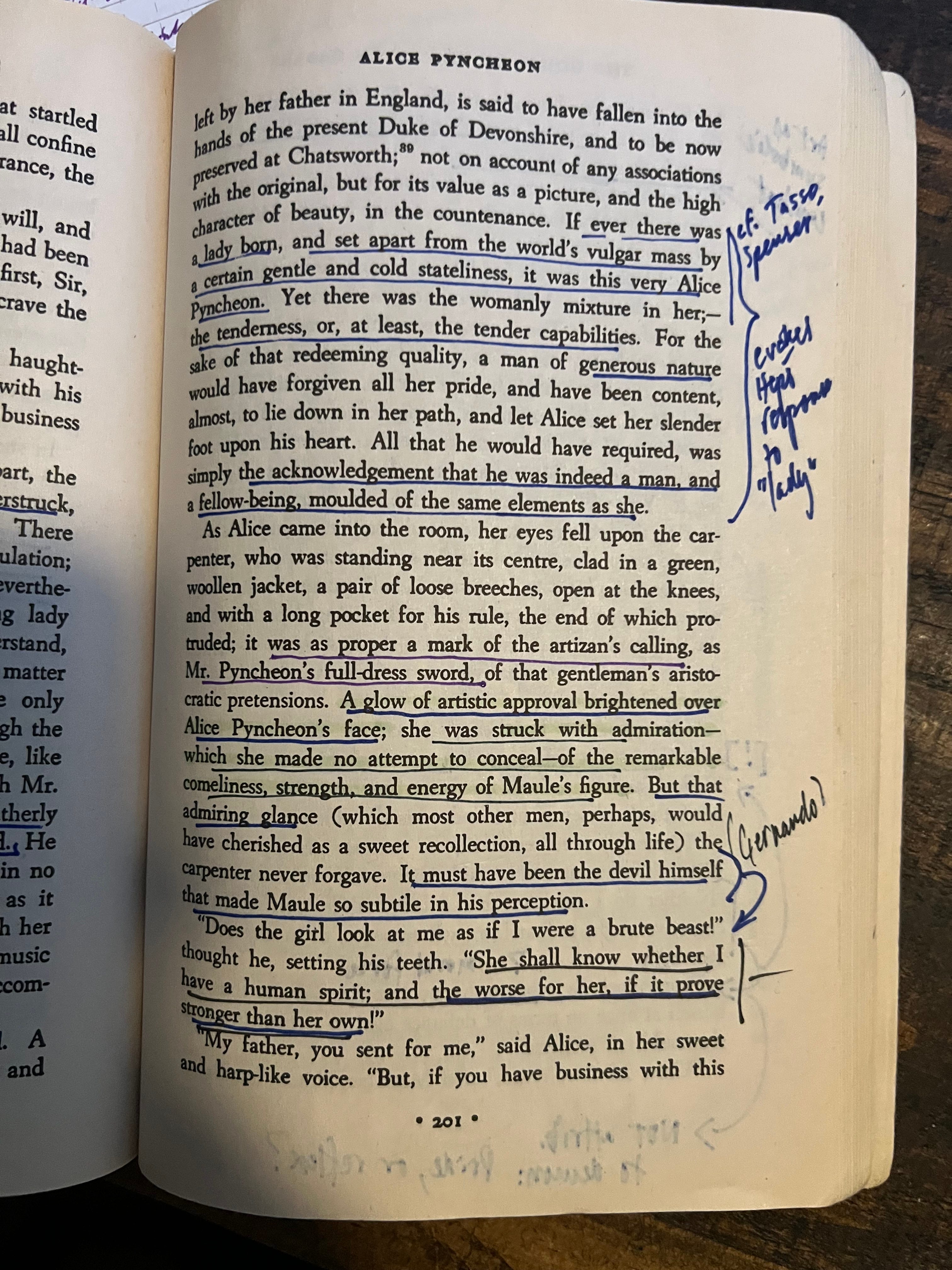
Alice’s demise—and Maule’s proto-fascist assertion of “the right of the strongest spirit” (CE 2, 206) begins with the mutually mis-attributed glance you can read about above. Again, Maule’s resentment is easy enough to trace. If you read from Sentimental Plot tropes, one might have expected him to warm to Alice’s admiration, which would also be for his innate human dignity. But what if, working more from a Pride and Prejudice template, he sees how Alice looks at him correctly? That is, leaving aside Holgrave’s sympathetic nod to Alice, it would be in keeping with her education and experiences—her aristocratic, prideful, and cold nature—to warm to Maule as an artistic object rather than as a human being. Each one constrained by the possibilities of converting vital warmth into moral force prescribed to them by their places on opposite margins of Standing Order culture, Alice’s encounter with Maule prefigures the murderous humiliation which will kill her.
It does not take much reflection to realize that this story must come from a Maule. Holgrave’s story shows that Matthew and his descendants recognized and repented his spiritual aggression. (The name Holgrave reinforces a bit from Chapter 1, which mentions that Maules too seemed to have “faded from the world”). Crucially, when faced with almost the same opportunity has ancestor had, Holgrave refuses to take advantage of Phoebe because he recognizes the integrity and worth of her spirit.
History, in short, changes, and one element of the counterfeit of right changes because neither Phoebe and Holgrave had identities formed by the Standing Order or its would-be successors. The “natural magic” which forms their consent-based, voluntary-labor courtship seems drawn from Albert Brisbane’s Associationism. People who think the ending is a tagged-on happy ending love-letter to Sophia overlook the fact, that as Brook Thomas argued, that labor-theory of value means that since the Maules actually built the house, it’s ok that they get it. Redeeming the wrongs committed along the way by both families suggests a potential escape from the epic game of winners and losers identified by David Quint. This escape—and the Hawthorne’s fascination for Paradise Lost and the garden of eden trope—is an old, even inaugural feature of Hawthorne’s rejection of Standing Order norms.
Like Hepzibah’s heroic emergence from the confines of feminine gentility to become the domestic dragon who protects Clifford from Jaffrey, this change happens because human contact and relationships cause people to rethink and reimagine what happened to someone else via a story. It’s a generative and generous use of imaginative intelligence. Most of the characters in H7G, pointedly, do not value this. Imposed habits of thought even drive the narrator to lie to readers about the Pyncheon who wanted to, and probably did will the house back to to Pyncheons—an act which drives his death at Jaffrey’s instigation, if not hands.
Today, of course, we are victimized by the lastest attempt to counterfeit right by asserting a kind of divinity and attributing it to stolen texts arranged by clever probability engines. H7G contains an early recognition that the promise of technological advancement would most likely only serve the interests of colonization, capital, and exploitation. Pyncheon pride should have been linked to Alice’s artistic powers, as it finally finds expression in Hepzibah’s heroism and Phoebe’s “natural magic.” That we still have discourses whose sole purpose is to legitimate counterfeits of right . . . well . . . it’s not just Mark Burnett and Walter Isaacson and the Murdochs who have a lot to answer for in profiting off of forging values.